Torrevieja
Brief historical description
Today, Torrevieja is one of the principal cities in the Community of Valencia, both for its dynamism and its economic strength as well as the high number of inhabitants registered on the town census. The fourth largest in the Autonomous Community. This has mainly come about due to the tourist and urbanisation development that the city has experienced in the last twenty years.
We could say, without a shadow of a doubt that the changes that have affected Torrevieja in this recent period are far more notable than the ones that have occurred since its creation over 200 years ago. However, it was not until 1803 that the Salt – Industry moved to Torrevieja from the neighbouring town of La Mata where it was originally based. This would be the starting point for the development of Torrevieja as a town and later as a larger city.
In 1829, an earthquake devastated the Vega Baja Region and Torrevieja was raised to the ground. However, this allowed for a new urban development of the city that still goes on today. One of the most important persons related to the reconstruction of Torrevieja is the Architect Larramendi, who designed the layout of the straight and wide streets – as was the custom in that period of time – on the grid system.
Another historical date for the town was without a doubt 1831, when King Alfonso XII granted the title of City to Torrevieja.
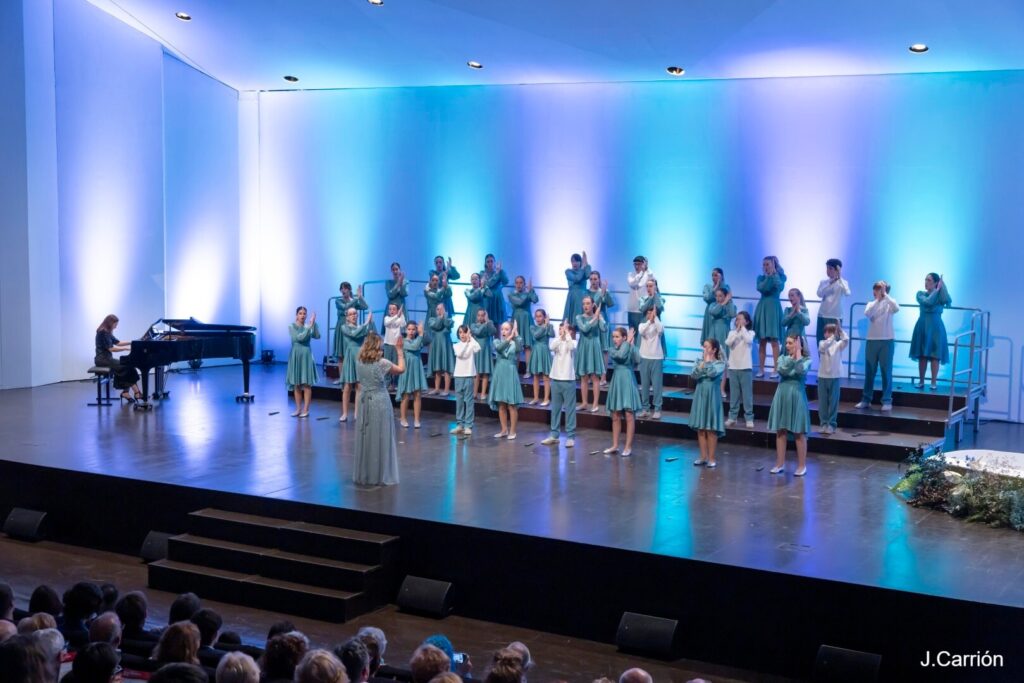
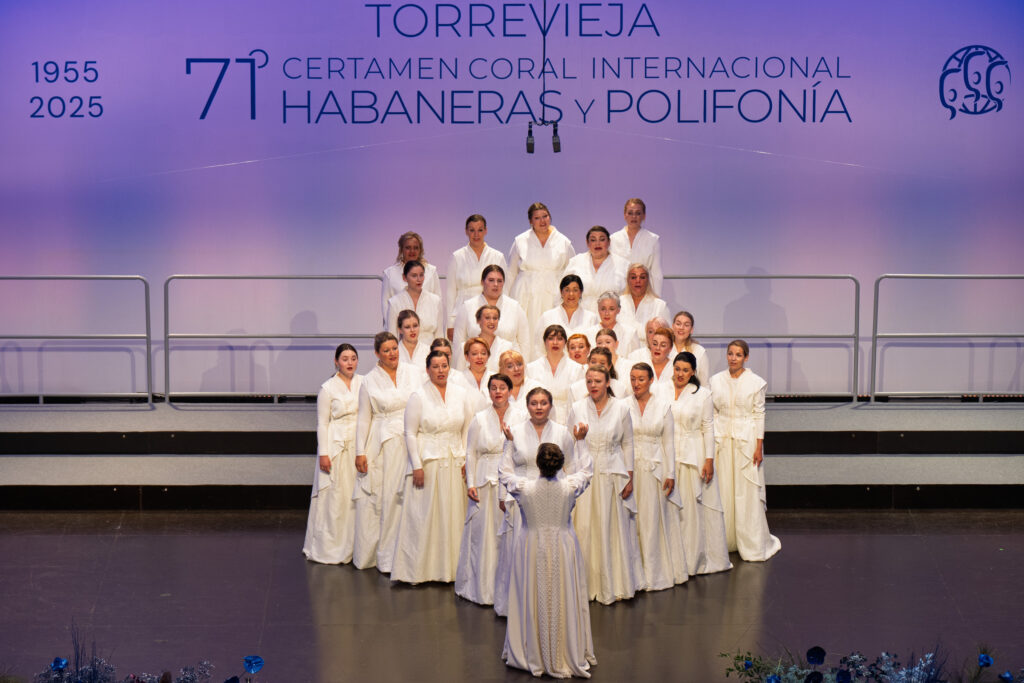
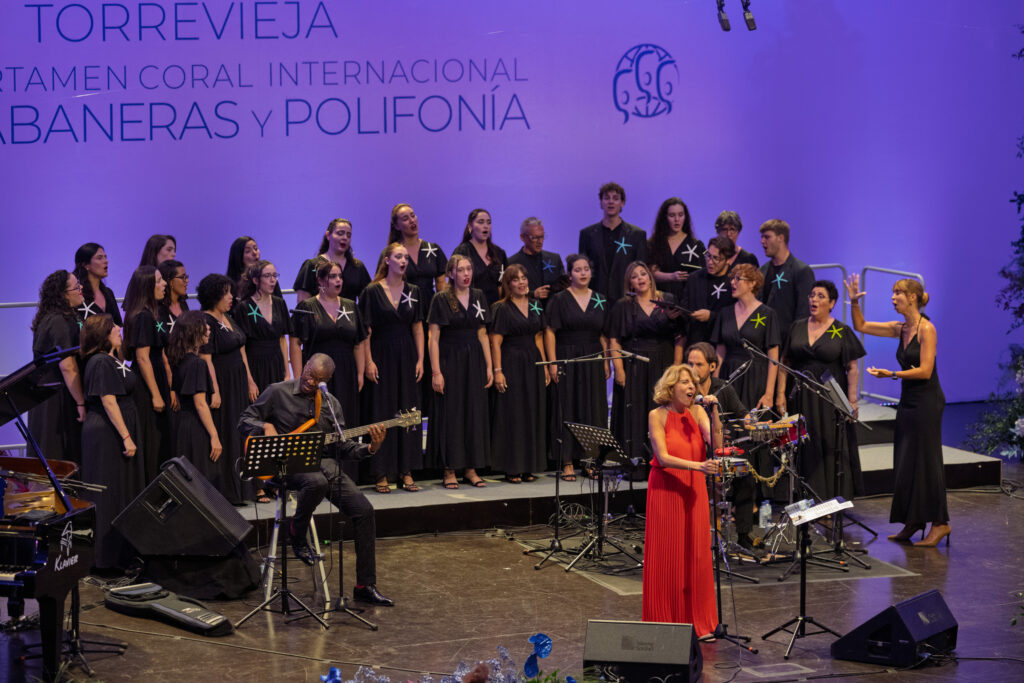
Torrevieja has experienced many different transformations during its economic life. Some of these changes have marked the modern character of the city, for example during the first years of the 20th Century, the Bay of Torrevieja had the largest fleet of sailing boats in the whole of the Mediterranean, exporting local products to the four corners of the world, such as the far-away Antilles. Torrevieja played a vital role in maritime commerce. However, once sail gave way to steam on the Antillean route, it became part of the memories that are told in the many sailing stories and songs, which today are part of the Habanera history. The reminiscences still continue to the present, for those lands and melodic rhythms, and we are reminded of this through the annual International Habaneras Contest. This popular music is a feeling from the heart of a historic working maritime town.
The Coast
The coast of Torrevieja provides a wide range of offers to enjoy the sea and the sun. Large crowds gather around its fine-sand beaches, such as the two-kilometre long “La Mata Beach”. At this beach we can also find the Municipal Natural Park of the “Molino del Agua” (Water-mill), which gathers the last fossil dunes in the whole of the Community of Valencia.
Moving along southwards, the next beach we stumble upon is “Los Locos” (The Loonies). This very popular beach owns its name from the fact that in the past there existed a psychiatric asylum that was used for summer purposes by the patients of the nearby Murcia sanatorium, whose head-doctor owned that area.
After passing by the very small beach of the “Curva del Palangre”, we find the “Playa del Cura” (Priest Beach); this urban beach is surrounded by tall buildings and is possibly the busiest beach of the city due to its central location.
Inside the docks of the city there’s another beach, although its location inside the port does not allow it to be called a beach. Nevertheless, the “Acequion Beach” is very popular for its clean sand and the clarity of its waters.
At the end of the port, besides the Western or Salt docks, we find the “Naufragos Beach”, which in the last years has experimented a regeneration and is today one of the preferred beaches by local Torrevieja residents as well as by tourists.
Lastly and a little further away from the town there’s the small “Cala Ferris”, which is surrounded by palm-trees and has an exotic and tropical feel to it.
Another characteristic of the Torrevieja coast are its cliffs. These rugged areas where the sea slams on to the sharp rocks hold little inlets (Known as “calas” in Spanish) which make very pleasurable and exclusive bathing areas. Inlets such as “El Mojon”, “La Zorra”, “La Higuera”, “El Gambote” or the “Cala de los Trabajos” are some of the favourite spots for small groups of bathers who enjoy deep waters as well as quite spots.
Finally, we also have to mention the natural swimming-pools that have been constructed in open sea by the Juan Aparicio Esplanade. These are ideal areas to bathe in and relax whilst only a few steps away from the Torrevieja town centre, numerous bars, restaurants, cafes or ice-cream shops.
Places to visit
Torrevieja is a young city, recently constructed and of a modern style town planning. Nevertheless, it offers visitors numerous interesting places to visit and that help to understand the history and culture of the city and its people a little better.
Historical sites
Eras de la Sal:
We have to start with the oldest site of the city and which is part of the Historic and Monumental docks of the Eras de la Sal.
The first jetty of the town and the old salt deposit were constructed in 1777. The valuable mineral was transported from the Torrevieja Lagoon and then stored for its shipment. Today this area has a very different function as it is the base for the International Habaneras and Polyphony Contest.
The old walls of the premises allow for a perfect setting of this famous event in the choir world.
Several sculptures dedicated to the Habaneras and the Contest are situated here, as well as an old reconstructed wooden rocking horse and a barge that was used to transport the salt to waiting ships anchored around the bay and would later make their way to the four corners of the world.
From the highest point one has a magnificent view of the whole of the port of Torrevieja.
Plans are being made so that in the near future this emblematic place will also be the new site for the Sea and salt Museum.
The Torrevieja Casino
Built in 1896, it is part of what is aesthetically known as “end of century” architecture. Its luxurious main lounge and magnificent coffered ceiling must be seen and enjoyed, as well as the beautifully Arab style hall or the lounge known as the “98 Generation”; one can find many portraits of artists from that movement. Today, this private building opens its doors to the general public and holds exhibitions and several other cultural activities.
The old Railway Station
Several building used to form the old railway station that linked the inland towns with the coast. Today, that rail line no longer exists. Surrounding the restored station, there’s a beautiful green area with fountain. Nearby there’s another building that acted as a station long time ago but is today the “Ricardo Lafuente Aguado Habaneras Museum”. And in an old ware-house, which has also been renovated we can visit the Salt Industry Centre. From this old complex that was part of the station is the starting point of the 6 kilometre-long green - route for pedestrians and cyclists, which uses the old rail line and that circles the Torrevieja lagoon. This lagoon is also known as the Pink Lagoon due to the colour of its waters.
The Moor Tower
It is thought, that the place where the actual Moor Tower stands was the area where a watch-tower was erected in the 14th Century and that controlled the whole of the coast. From this point, at the top of Cape Cervera, the view is amazing and would have been the ideal place for this important tower.
Through several studies of the area, experts have come to the conclusion that the circular building had a diameter of around 9 metres and next to the actual tower, we find several old wells that used to gather rain water to be used by the tower’s garrison.
Today this area is surrounded by a 23.000 m2 park known as the “Mirador Turistico de la Torre del Moro” and still offers a magnificent panoramic view of the coast. It also has inland paths for walking; a modern sculpture dedicated to Tourism and children’s play area. There are also two small cottages, which are replicas of the old town houses. One is the Tourist Information Office and the other is a bar – café.
La Mata Tower and the Wharf Square
Both the Tower and the wharf have been recently reconstructed. Nearby, next to the Acequion Canal (1928), which links the La Mata Lagoon with the sea, several archaeological sites were found underwater. These Roman remains date as far back as the First Century D.C and amongst which we can find several bowls that were used for the preparation of garum, a type of sauce that was widely appreciated during the Roman times.
Museums
The Sea and Salt Museum
This museum is fundamentally ethnological and is at the present time provisionally located in the city centre whilst waiting to be moved to its final place at the historical “Eras de la Sal”. Visitors can rapidly feel the stamp that the Sea has left over its people since time began. It also emphasizes the birth of Torrevieja “through the sea and the salt and for the sea and the salt”. The museum is divided into three different sections dedicated to marine archaeology, the salt industry, handcrafted fishing, coastal navigation, sailing ships, boatbuilding, the Spanish Armada, salt products and the museum workshop. It also contains a sizeable collection of naval mock-ups.
We could also say that the Sea and Salt Museum has a “floating” extension also, as anchored in the Torrevieja Port we find the S-61 “Delfin” Submarine. It was handed over by the Spanish Navy to the town-hall in order to be used as exactly that: a floating museum. Furthermore, since the month of March 2006, right next to the submarine, we can now also visit the Patrol Boat “Albatros”, which is also part of the options that the sea and Salt Museum offers visitors.
“Tomas Valcarcel” Holy Week Museum
This social-cultural centre has in one of its buildings the Holy week Museum, where visitors can see the patrimony of Torrevieja Holy Week Brotherhood. In another building besides the museum, there are specially conditioned halls used for conferences and meetings.
“Ricardo Lafuente Aguado” Habanera Museum
The Maestro Ricardo Lafuente Aguado was the author of many popular habanera songs such as “Torrevieja” or the “Hymn of Torrevieja”, to name just a few. He was also Named Favourite Son of Torrevieja and during many years he was the director of the choir group named after him.
As we have already mentioned, this museum is located in the old RENFE Rail Station and inside there is a collection of memories, photos, plaques and many prizes awarded to the Maestro.
Churches
Church of the Immaculate Conception
Erected in 1789 part of its reconstruction during the year 1844 used stones from the nearby Old Tower at Eras de la Sal, which was at the time simply in ruins due to the devastating earthquake that affected Torrevieja.
This Neo-Classical style Church has indoors the traditional crossed-shaped foundation covered with a barrel vault; with windows in the central area and with arris on its wings. It also contains numerous beautiful images, especially of the Immaculate Conception, Patron Saint of the City. There is a work of art by Jose Puche in the high altar with the image of the Patron. The façade is simple and sober with two bell towers.
Parish Temple of the Sacred Heart of Jesus
Constructed in 1976 over the grounds of the old chapel that was erected in 1921. In 2007 it was demolished the existent building of the Oriente Square. It has been replaced by an underground car-park as well as a new temple with a higher capacity, due to the increase in the number of inhabitants that has especially affected the La Punta District where it is located.
There are many other chapels, temples catholic or not, around the city as well as in different urbanisations within the Torrevieja Municipality.
Other places of interest
The Port
Without a doubt it is the soul of the city. It has decisively contributed to the economic development as a commercial exit for salt, a haven for small fishing vessels and in the past a place of construction of great sailing ships.
Today, the activity in the port mainly concentrates around the fishing industry as well as the exportation of salt. However, it has also become one of the main marinas of the Mediterranean Spanish coast-line; there is a new marina actually being built at the moment, the “Salinas Marina” will link the already existing “International Marina” and the “Royal Yacht Club”.
The construction of the “Salinas Marina” will mark a new stage of the port that will undergo a face-lift and see many changes that will finalise into a modern port for a modern city that is Torrevieja.
Other buildings
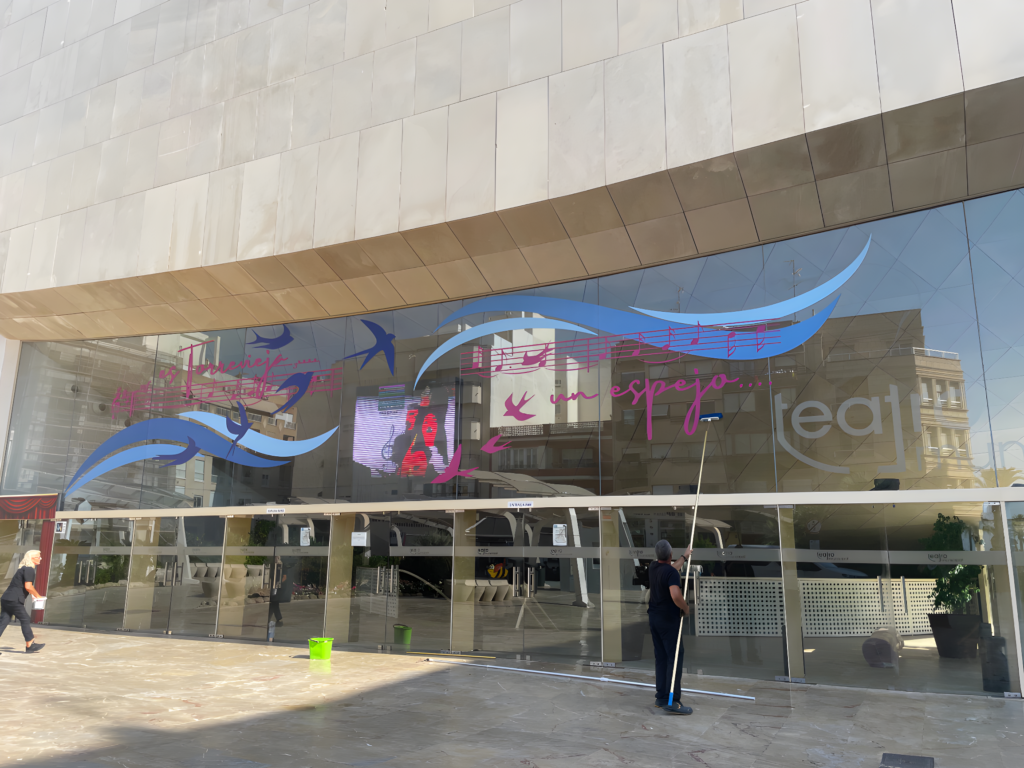
There are some recently constructed buildings that due to their style or size are well-worth a visit. These include the “Music Palace” (1999) where important and numerous concerts take place and are also the headquarters of the Music Conservatory as well as the Torrevieja Musical Union. Other important buildings include: The Infanta Cristina Sports-Hall (2000), the refurbished Municipal Library at the “Joaquin Chapaprieta Torregrosa Schools”, the Cultural Centre of the Virgen del Carmen, which was recently inaugurated, as well as the Relaxation Park nearby the Torrevieja Lagoon is still under construction.
Finally, the next opening inauguration will be the Municipal Theatre, whose model has been exhibited at the Modern Art Museum in New York as being one of the fifty most important works in Spain.
Boulevards and gardens (Torrevieja)
The charm of its streets and avenues
The best way to experience the charm of the city is by enjoying a walk along its streets and promenades. There, one can feel the true spirit of the city and its inhabitants, who enjoy these public areas in harmony with the environment and the rest of the citizens.
Anytime is good to enjoy a walk round Torrevieja City, from the early morning hours until late at night; there is an ideal street to walk along; lonely streets for those who enjoy the quiet or busy streets for those who prefer to walk amongst large crowds. There are city streets, natural streets amongst dunes and pine-trees and of course there are Mediterranean-style streets.
The Mediterranean is ever-present in Torrevieja and one of its most emblematic walkways is perhaps the one that stands above the Levante seawall and that goes towards the open sea. Walking along here, one gets the feeling that they are travelling on a ship that got to close to the city in order to enjoy it. It is almost two kilometres long and is an ideal place to observe the dawn from the end of the dyke besides the ever-present lighthouse. Or to enjoy the sundown from the viewing point that stands above the statue dedicated to the Women of the Sea, symbol of the Torrevieja mothers of the past when their life’s were even more united to the sea than they are today.
Continuing with our walk, we come across one of the busiest street that is in fact dedicated to a journalist – Juan Aparicio -. It is also known as the Maritime Promenade or of “The Rocks”. Along this wonderful pedestrian street there is a bronze statue of a woman “The Beautiful Lola” who is sitting on a bench staring at the sea. Her look hides the yearning for her love that is out at sea far away. This statue is one of the most photographed in the city as visitors and tourist can sit right besides her and take a picture with her. This is yet another tribute to women, for which Torrevieja local feel a special respect and affection towards.
The Juan Aparicio promenade pays another tribute but this time to the Torrevieja sailors with a huge statue in honour of the “Man of the Sea”, whose immortal look is directed to the far-away horizon in search of that boat that will allow him once again to sail the seven seas.
The promenade continues along the Playa del Cura, which is linked by the Monument to the Mediterranean Cultures and the “Curva del Palangre with another promenade known as the “Playa de los Locos”. We carry on our walk but this time over some rocky terrain as we pass some peaceful inlets, which then take us to the “Playa de la Mata Promenade”. This walkway is about three kilometres in length and takes us straight into the last remaining fossil dunes in the Community of Valencia. On the other side there is the beautiful and exemplary La Mata Beach and a little further away we find the Watermill Park, which is in fact the only Municipal Natural Park in the whole of the Community. Finally, we reach the district of La Mata and its old Roman Wharf.
Going back towards the centre of Torrevieja we have many other interesting streets to discover, such as the “La Libertad Avenue”, which is also known as the “hippy street” due to its numerous handcraft market stalls and is of course an ideal place to find your holiday gifts. The “Maestro Velero Walkway” is a popular meeting point for many locals and it offers some wonderful views of the International marina and the Yacht Club.
However, the most emblematic street is the “Vista Alegre Avenue”, which lends its name to the weekly local magazine that is celebrating its 60th anniversary this year. The “Vista Alegre Paseo” was in the past the very soul of the city where people would gather round the today disappeared bandstand. Nowadays, the music band is paid tribute through a set of bronze statues that include a director and five other musicians that stand along the walkway. They seem to produce a recorded sound in the memory of each passer-by that makes them hear their favourite tunes.
This is avenue is also famous for being the first place to hear the habanera songs at the first ever International Contest, back in 1955. This was also the old stage where locals would see their favourite music artists; many still remember a very young Julio Iglesias playing in this very place whilst young girls were screaming and crying. And this brings us to yet another tribute, “The Choir Monument”, which stands where the first stage was and is dedicated to everyone who throughout history has made the International Habaneras and Polyphony Contest a reality and a success.
Parks and gardens
After all the walks we have to mention some Parks and Gardens. These areas of idleness are intimately linked with the Mediterranean spirit of the towns and cities of the Community of Valencia. And Torrevieja has plenty of these green open spaces, as in the last few years there has been an increase in the number of parks and gardens as well as the notable quality of these.
We can start in the centre with the Plaza de la Constitucion (Constitution Square), which is perhaps the most traditional square of the city. Here we can find the town hall and the Church of the Immaculate Conception. This busy square is of a traditional architectural style that stands out for the presence of ceramic in ochre and dark yellow colours and has not changed for almost a century. It is surrounded by many trees and in the centre of the square stands a small fountain. It is also the location where each Christmas a huge Nativity scene is erected.
A more recent and modern square is the Plaza del Molino (Windmill Square); situated to the North of the city it has a surface of around 4.000 m2. In the centre of the square stands a reproduction of one of the windmills that existed in that very area along the 19th Century. It also has many indigenous trees.
The Jardin de las Naciones (Garden of the Nations) is a magnificent park that is located by the junction of the N-332 and CV-90 main roads. It has a surface area of almost 40.000 m2 and has a great lake that is actually in the shape of the European Continent. Inside the lake there is a geyser and apart from the flora there are also many valuable sculptures and other pieces of art. The park also has an exhibit centre located inside some old dungeons as well as a temple dedicated to Saint Emigdo, Co-patron of the city and lawyer against natural disasters.
The Parque de Dona Sinforosa is the ideal place to listen to the Music Band, especially during the sunny spring mornings at the Neo-Classical bandstand that is erected there. Located opposite the Acequion Beach and the Marina. It has numerous large trees as well as a beautifully restored fountain.
The Parque del Molino de Agua (The watermill Park) owes its name to the existence of an underground cave with water that supplied the city and the salt industry through an old watermill. Today it is a large natural area with over 500.000 m2 in surface. It is mainly populated by pine-trees and has numerous paths as well as a small stream that ends in a lake. All the water is supplied from the underground aquifer. This park is extended as far as the CN-332 main road, on one side and the La Mata Beach on the other. Furthermore, it was declared as a Municipal Natural Reserve by the Government of Valencia.
There are many more parks and gardens but unfortunately we don’t have sufficient space to talk about them. Here are just a few of these: Parque del Rincon de Asturias Corner of Asturias Park), the Maria Asuncion Square, Plaza de la Marina Espanola (Square of the Spanish Navy), the Miguel Hernandez Square, the Mayor Waldo Calero Square, Las Barcas or the enormous Antonio Soria Park amongst many others.
Gastronomy
Traditional
The gastronomy of Torrevieja is traditional to the Vega Baja Region, with all the variants brought about by the proximity of the sea.
It is cuisine that is mainly based on natural sea-products as well as local garden products. It is a simple cuisine that achieves surprising results. Amongst the main dishes we have to mention some rice dishes and especially the “Caldero de Pescado”. This popular dish has a deep maritime tradition. Other rice dishes include, rice with anchovies, with chicken and rabbit, and many more. All of which can be tried around Torrevieja.
Some of the local popular stews are made with a cod base, although in the past skate was more widely used. The traditional dish that is eaten during the local festivities is the “Cocido con Pelotas” (meatballs). A dish that must be tried and is especially made available during the Festivities in honour of the Patron Saint on the 8th of December.
In the nearby town of La Mata, wine is produced using the Merseguera grape variety. This variety of grape is very old, as some are previous to the “phylloxera” epidemic that ruined European vines in the 19th Century. However, the epidemic did not affect the La Mata area due to the special configuration of the sandy soil where they are cultivated. At the present time, work is being done for the modernisation of the “La Mata wines” as well as its commercialization as ecological wines that they are.
International
The increasing tourist development of Torrevieja has contributed to the appearance of numerous restaurants opening in the area, all of which have improved the economy as well as creating a cosmopolitan feel to the city. Nowadays, one can walk around Torrevieja and find eating places of different origins such as: Lebanese, Argentinean, Mexican, German, Belgium, Moroccan, Indian, Russian, Italian, French … All of which allow the starving customer to try original dishes from almost any part in the world.
Festivities
As any good Mediterranean town, Torrevieja dedicates a high percentage of its time and resources to festivities, as they complement popular local culture. Moreover, the city of Torrevieja does not only celebrate traditional festivals but these have been joined by newly created ones that have been promoted due to the importance of tourism in the city. These new festivals have been received with open arms by all locals as well as those who have moved to Torrevieja or use it as a second place of residence.
Following a chronological order, the first festival takes place on the 5th of January with the colourful and imaginative “Parade of the Three Wise Men”. The month of February means Carnival time. Streets are filled with music and crowds that take part in the many parades, both during the day and at night. The next is basically the complete opposite; Easter is a time of solemnity and devotion, with many processions on every day. Some of the most important of these is the “Silent Procession”, on Maundy Thursday. Or the “Holy Burial Procession” on Good Friday as well as the “Encounter” on the morning of Easter Sunday.
With the month of May comes the “May Fair”, which in simple terms is like a piece of Andalusia ending up besides the port of Torrevieja. The atmosphere is similar to what one might find on the streets of Seville. This is followed by the “Procession in Honour of the Virgin of the Rocio” that takes place during the month of June. Also during this month we have the “Festival of the Sacred Heart”, specially celebrated around the Punta District and the “San Juan Bonfires”. For several years now, the nights of the 23rd and 24th of June, hold a magnificent fireworks display.
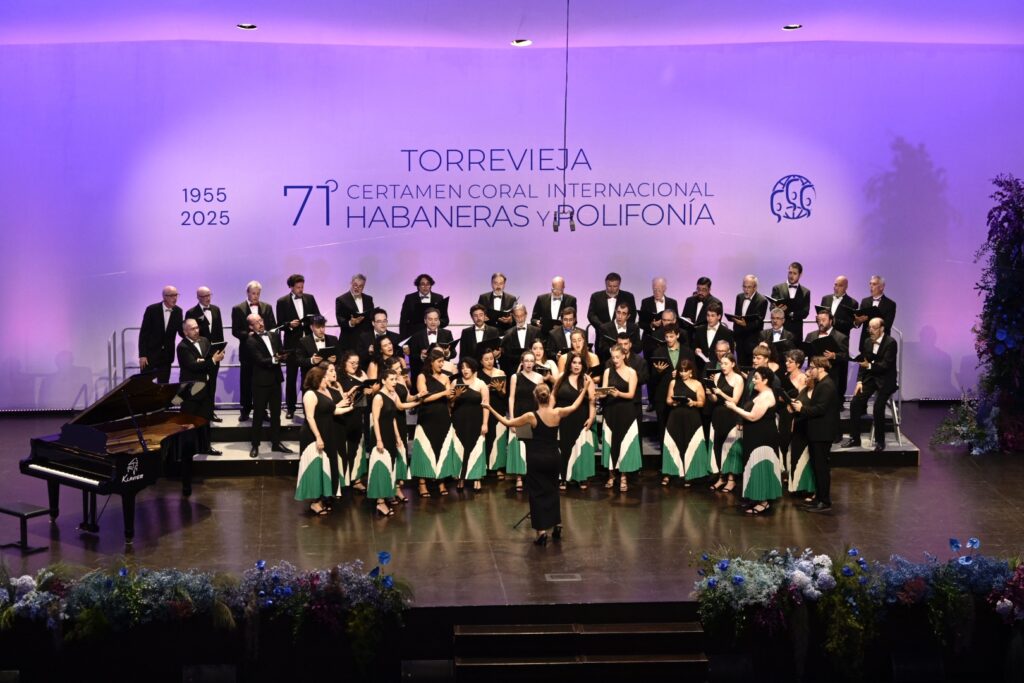
In the middle of summer during the month of July there’s the “Sailors Festival”, which is in honour of the Virgin of the Carmen. This is followed by the most famous cultural event of the city, the International Habaneras and Polyphony Contest.
The month of August honours Saint Emigdio, the Co-patron Saint of the city. This is especially celebrated around the Calvario District. August also celebrates the Coronation of the Salt Queen as well as the festival in honour of Saint Roque.
The municipal district of Torrelamata celebrates the festival in honour of the Virgin of the Rosary with a festival as well as solemn procession during the month of October.
November is the turn for musicians who honour their Patron Saint Cecilia with live concerts and parades.
The most important festival of the city is held in December. In honour of the Patron of the city, the Immaculate Conception. During these days, the city is redecorated with colourful parades of ‘carnival figures with large heads’ that are joined by the sounds of the flute and the drum. If this is not the most spectacular festival, it is without a doubt the nosiest. On the 8th of December, day of the Immaculate, a solemn procession takes place around the main streets of the city. Thousands of spectators gather round to wave to the image of the Patron Saint as she passes by them. The end of the festivities is celebrated with a huge firework display over the city of Torrevieja.
Surrounding areas
Torrevieja is situated on the Southern side of the Alicante province, in the Vega Baja del Segura Region. The towns around Torrevieja are essentially agricultural as the lands are watered by the today limited waters of the River Segura. Despite the economic difficulties that affect almost all agricultural towns, the enormous tourist development of the coastal areas has provoked some towns into showing more and more interest towards the tourism boom.
Therefore, Torrevieja is today surrounded by five golf-courses that are between 10 and 20 minutes drive from the city centre. Thus making the salt City into a strategic place for all golf lovers who regularly enjoy visiting the various courses.
At the same time, nearby towns such as: San Miguel de Salinas, Almoradi, Rojales, Algorfa, Bigastro, Catral, Callosa, Redovan… offer visitors a look at life in inland Spain whilst at the same time providing modern commercial facilities as well as a high number of local and traditional celebrations.
Special mention should be made towards the City of Orihuela. This authentic museum-city has many points of interest starting with its Cathedral as well as the numerous Churches and historical buildings. In recent years, Orihuela has experienced an enormous growth around its coastal areas where thousands of houses have been constructed in what is known as the “Orihuela Beaches” or coast.
Lastly, we should mention the two nearest towns to Torrevieja, which are Guardamar and Pilar de la Horadada. Although they are less built up than Torrevieja, they still offer visitors some pleasant beaches as well as an important quality in its services.
Extending to the surrounding areas, we find important towns such as Elche, with its amazing palm-tree groves, which have been declared a “World Heritage Site”. The celebration of the “Misteri d’Elx” was also declared a “World Heritage Protected Site” by the UNESCO.
Approximately 40 minutes sailing time from the port of Torrevieja, we stumble across the Island of Tabarca, the only inhabited island in the Community of Valencia. It is especially busy during the summer months when it becomes a haven for many sailing boats in search of clear blue water as well as the gastronomic delights. The waters surrounding the island have been declared as a “Maritime Nature Reserve” and any type of fishing is prohibited.
Opposite Tabarca, we find the town of Santa Pola, which has numerous sites such as its castle and an interesting aquarium.
Less than 50 kilometres away from Torrevieja are the cities of Alicante, capital of the province and Murcia, capital of the Autonomous Community of Murcia. They provide all the same amenities that one would expect in any other major city.
How to get there
The city of Torrevieja has excellent road connections, as there are two exits from the AP-7 motorway. These are signed as “Salida 745” (Exit 745) – North Torrevieja and “Salida 758” – South Torrevieja. From either of these, there is one road that goes straight into the town. The “North Exit”, which is the furthest away, has two lanes in both directions.
The AP-7 motorway allows for a fast and comfortable drive to the cities of Alicante, Murcia and Cartagena, Madrid and Andalucia. As well as acting as a link to the rest of Europe.
On the other hand, the International Airport of “El Altet” in Alicante is only 40 kilometres away and “San Javier Airport” in Murcia, is a mere 30 kilometres from Torrevieja. All of which mean that in less than half-an-hour one can make his or her way by plane to anywhere around the globe.
From Alicante and Murcia there is a comprehensive train (RENFE) service that links to the rest of Spain. Furthermore, this summer 2006, the company “Acciona Transmediterranea” is planning to put into operation a “Fast Ferry” that will link Alicante with the Island of Ibiza in just under an hour. Also from the port of Alicante, there is a regular ferry service that links the city with the port of Oran in Algeria.
Where to stay
Torrevieja is a tourist town that is mainly self-catering holiday home rentals. There are around 2.500 hotel rooms that are spread about the city; therefore, the hotel accommodation is limited. These range from one to three-star establishments.
Here is an informative guide to some of the city hotels:
Hotel Cabo Cervera ***
Situated on the far-side and directly in front of La Mata Beach at Cape Cervera. It is at the base of the Moor Tower and 5-kilometres from the city centre. 188 rooms with lounge. Available with one or two bedrooms.
Address:
Ctra. De Torrevieja a La Mata, s/n
Tel: 966 921 717
Fax: 966 921 896
03180 Torrevieja – Alicante
www.hotelcabocervera.com
Hotel Torre Joven ***
Located at the Rocio del Mar Urbanisation, very near the beach. With 110 spacious rooms, 40 of which are Junior Suites.
Address:
CN – 332, Urbanizacion Rocio del Mar
03180 Torrevieja – Alicante
www.hotel-torrejoven.com
Hotel Masa Internacional ***
With fantastic views of the Torrevieja coast, this hotel is located besides the Moor Tower and has 50 rooms, outdoor swimming-pool, restaurant with panoramic views…
Address:
Ctra. De Torrevieja a La Mata, s/n
03180 Torrevieja – Alicante
Hotel Madrid ***
This small family–run hotel with 26 double rooms has been recently renovated. Near the city centre and very close to the Acequion Beach, making it an ideal place for a stay-over.
Address:
C/ Villa Madrid, 15
03180 Torrevieja - Alicante